
Aircraft donation tax deduction: what the IRS actually requires
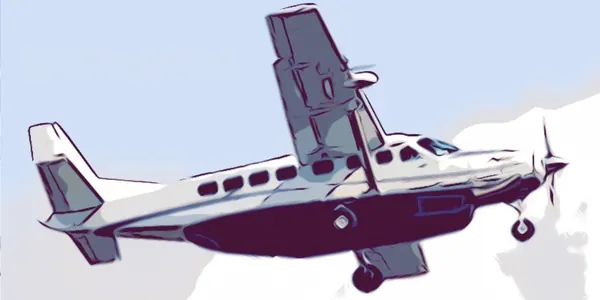
If you are thinking about donating an airplane, the tax rules are not the same as writing a check. The IRS treats an airplane as a “qualified vehicle,” along with cars and boats. Your deduction — if you can claim one — depends on what the charity does with the aircraft, the paperwork you attach to your return, and whether you itemize deductions.
Reboot Charity is a Florida 501(c)(3) nonprofit (EIN 46-1064203) and has operated since 2012. We accept aircraft running or not, and donated aircraft, parts, and proceeds help support disaster-relief flights, including work with our partner Volunteer Pilot Group (VPG). This guide explains the IRS rules so you can talk with your tax advisor with the right forms in hand. It is not a promise of any particular deduction.
Start an inquiry, with no obligation, on our Donate Your Plane page, or call (561) 621-7500.
The core rule: the deduction follows what happens to the airplane
Under Internal Revenue Code section 170(f)(12) and IRS Publication 4303, A Donor’s Guide to Vehicle Donation, the amount you may deduct for a qualified vehicle generally depends on what the charity does with it, as reported in a contemporaneous written acknowledgment. Charities often sell donated vehicles. If the charity sells your airplane, your deduction is generally limited to the gross proceeds of that sale (or the aircraft’s fair market value if that is lower).
Fair market value (FMV) is not automatically what you paid for the plane, what a similar airworthy aircraft lists for, or what an insurance policy says. As IRS Publication 561 explains, FMV is the price at which property would change hands between a willing buyer and a willing seller, with neither required to act and both having reasonable knowledge of the relevant facts. A non-airworthy or out-of-annual aircraft is usually worth less than a comparable aircraft that is ready to fly.
There are exceptions to the gross-proceeds limit. You may generally be able to deduct FMV (subject to applicable basis-related reductions and other deduction limits) if the charity’s acknowledgment certifies one of the following:
- Significant intervening use. The charity actually uses the vehicle to substantially further its regularly conducted activities, and that use is considerable — not incidental, and not an afterthought. Publication 4303 gives this definition; a year of daily use in one IRS example is an illustration, not a blanket rule for every aircraft.
- Material improvement. A major repair or improvement that significantly increases the vehicle’s value. Cleaning, minor repairs, and routine maintenance do not count. The exception also does not apply if you fund the improvement by giving the charity an extra payment.
- A qualifying transfer to a needy individual. Publication 4303 describes a narrow exception when the charity gives or sells the vehicle to a needy individual at a price significantly below FMV, in direct furtherance of a charitable purpose of relieving the poor and distressed or underprivileged who need a means of transportation. Applying sale proceeds to a charitable program does not meet this exception. This path is more commonly discussed for cars than for airplanes.
Which box applies is a facts-and-documentation question, not a slogan. If Reboot uses an aircraft in relief operations in a way that meets the IRS standard, or makes a qualifying material improvement before a later transfer, that is what the acknowledgment should describe. If the aircraft is sold without those exceptions, the gross-proceeds limit generally applies. Do not assume you will receive an FMV deduction.
Written acknowledgment required for claimed deductions over $500
For a qualified vehicle with a claimed value of more than $500, you generally cannot claim the deduction unless you attach a contemporaneous written acknowledgment. The charity may use Copy B of Form 1098-C, Contributions of Motor Vehicles, Boats, and Airplanes, for that purpose. The current donor instructions (Form 1098-C, Rev. April 2025) warn that if you do not attach Copy B when required, the IRS will disallow the deduction. If you e-file, you may need to include the form as a PDF or mail it with Form 8453, depending on your software. An equivalent written acknowledgment that includes the information Publication 4303 requires is also acceptable.
Timing matters. Generally, the charity must furnish Form 1098-C no later than 30 days after it sold the aircraft (if the sale box is checked) or 30 days after the contribution (if a significant-use or material-improvement box, or the needy-individual box, is checked). If none of those boxes is checked, you must obtain the form by the due date of your return for the contribution year, including extensions, or by the date you file if that is earlier.
For an airplane, Box 3 of Form 1098-C shows the aircraft identification number. If the charity sold the aircraft, Box 4c shows gross proceeds, and you generally deduct the smaller of that amount or FMV on the donation date.
If the charity is certifying significant intervening use or a material improvement, Publication 4303 says the acknowledgment must include a detailed description of the intended use and its duration, or of the intended improvement, and a certification that the aircraft will not be sold before that use or improvement is completed.
Form 8283 and qualified appraisals over $5,000
You generally also file Form 8283, Noncash Charitable Contributions, if the amount you deduct for all noncash gifts is more than $500. See the form instructions for exceptions.
If you are claiming a deduction of more than $5,000 for the aircraft, and that deduction is not limited to the gross proceeds of a sale, you generally need a written qualified appraisal by a qualified appraiser and must complete Section B of Form 8283 (the appraisal summary). Publication 4303 and the Instructions for Form 8283 (December 2025) state that the appraisal must be made no earlier than 60 days before you donate the property, and you must receive it before the due date (including extensions) of the return on which you first claim the deduction.
A qualified appraisal is generally not required for a vehicle when your deduction is limited to the gross proceeds from its sale and you have a contemporaneous written acknowledgment that meets section 170(f)(12)(B). In that situation you generally still complete Form 8283 Section A, even if the deduction is more than $5,000, and you attach the acknowledgment. Ask your tax advisor which sections apply to you.
You do not have to get an appraisal before you first contact us. In many cases it is better to talk through condition, title, and likely use or sale first, then decide with your advisor whether a qualified appraisal is required.
Other limits people often miss
- A donated airplane is a noncash gift. You generally must itemize deductions on Schedule A (Form 1040) to deduct it. Beginning in 2026, people who do not itemize may deduct up to $1,000 of cash contributions ($2,000 if married filing jointly) to certain qualified organizations, with other limitations — but that cash-only allowance does not take the place of itemizing for an aircraft gift. See IRS Topic 506 and Publication 505 (2026).
- Beginning in 2026, if you itemize, you can generally deduct charitable contributions only to the extent they exceed 0.5% of your adjusted gross income. Publication 505 states that any amount that falls under that 0.5% floor cannot be deducted in 2026, and that this limitation is in addition to the overall limit on itemized deductions.
- A charitable deduction reduces taxable income; it is not a cash payment equal to the aircraft’s value. Any tax savings depend on the deductible amount, applicable floors and limits, and the rest of your return — not on a simple sale-price comparison. Work through that with your tax advisor. Publication 526 explains the contribution limits that may also apply.
- If FMV is higher than your cost or other basis, you may have to reduce the deductible amount. Publication 526 covers property that has increased in value and related basis rules.
- If the charity provides goods or services in return, your deduction is generally reduced by their value, as shown on Form 1098-C.
How a donation to Reboot Charity usually starts
Reboot Charity accepts aircraft running or not. Acceptance is not automatic. The live Donate Your Plane page is the place to tell us the basics and to read the current process, including the paperwork we describe there. When you inquire, ask what we would expect to do with the aircraft — use it, sell it, or some combination — because that is what drives the tax documentation.
Selling is sometimes the better financial path, especially if you need cash or would not itemize. Compare a realistic net sale with the tax result your advisor estimates for a donation. The sell or donate comparison walks through that decision.
If you have avionics or parts instead of a complete aircraft, see Donate avionics and aircraft parts, or use the live parts inquiry and Avionics Donation Program forms. Loose parts usually follow the general noncash-contribution rules, not Form 1098-C, because 1098-C applies to motor vehicles, boats, and airplanes.
IRS sources used for this page
- Publication 4303 (Rev. 1-2015), A Donor’s Guide to Vehicle Donation — covers cars, boats, and airplanes, including the gross-proceeds limit, exceptions, acknowledgments, and appraisals.
- Publication 526 (2025), Charitable Contributions — who may deduct, itemizing, and qualified-vehicle rules.
- Publication 561 (December 2025), Determining the Value of Donated Property — fair market value and appraisal concepts, including vehicles.
- Form 1098-C (Rev. April 2025) and About Form 1098-C — donor instructions and filing by the charity.
- Instructions for Form 8283 (December 2025) — Section A and Section B, qualified vehicles, and qualified appraisals.
- Publication 505 (2026), Tax Withholding and Estimated Tax — the 2026 itemized charitable-contribution floor and the limited cash deduction for non-itemizers.
- Topic no. 506, Charitable contributions — itemizing, the 2026 cash allowance for people who do not itemize, and Form 8283 thresholds.
This is general information, not tax advice. Donation rules depend on your facts, your basis in the donated property, whether you itemize deductions, and what the charity actually does with the property. Beginning in 2026, additional limits may apply, including a 0.5% of adjusted-gross-income floor for itemized charitable deductions. The IRS can disallow a deduction if required forms or acknowledgments are missing. Consult your tax advisor or CPA before you donate or file.
Frequently asked questions
Can I deduct the fair market value of a donated airplane?
Only in some cases. If the charity sells the airplane without a qualifying significant intervening use, material improvement, or the narrow needy-individual transfer described in Publication 4303, your deduction is generally limited to the lesser of fair market value or the gross proceeds of the sale. If a qualifying exception applies and is properly acknowledged, you may generally deduct FMV, subject to basis rules and other limits. Confirm the boxes on Form 1098-C with your tax advisor.
What IRS forms are used for an aircraft donation?
For a claimed value of more than $500, you generally need a contemporaneous written acknowledgment, which is often Copy B of Form 1098-C, and you must attach it to your return. You generally also file Form 8283 if your noncash gifts total more than $500. A qualified appraisal and Form 8283 Section B are generally required if you claim more than $5,000 and the deduction is not limited to sale proceeds.
Do I need an appraisal before I donate my plane?
It depends on the deduction you will claim and whether that amount is limited to sale proceeds. When a qualified appraisal is required, it must be made no earlier than 60 days before the donation and received by the due date of your return, including extensions. Talk with us and with your tax advisor before you spend money on an appraisal.
Does Reboot Charity provide the tax forms?
The charity is responsible for the contemporaneous written acknowledgment for a qualified vehicle, and it may use Form 1098-C for that purpose. You are responsible for your tax return, Form 8283, and any required appraisal. Reboot can discuss the process; your tax advisor should review what you file.
Do I have to itemize to benefit from an aircraft donation?
Generally, yes, for a donated airplane. Publication 526 states that you must itemize deductions on Schedule A to deduct a charitable contribution. Beginning in 2026, a limited deduction for certain cash gifts is available without itemizing, but that allowance does not replace itemizing for an aircraft donation. If you take the standard deduction and have only a noncash aircraft gift, it usually will not change your federal income tax. Your advisor should also apply the 2026 0.5% of AGI floor if you itemize.
Tell us what you have. We will help you sort the next step.
This is an inquiry, not a commitment to donate. Call (561) 621-7500.